The Small Scene That Makes a Travel Memory Last
A small-scene travel memory gives a journey a clear shape. Learn to choose one vivid moment, build around it and leave the rest outside the frame.

The common mistake with a travel memory is trying to account for the whole journey: every stop, meal, delay and landmark. The result can read like an itinerary, while the moment that mattered gets buried; choosing one small scene gives the account a centre without pretending it contains everything.
When the account reads like an itinerary
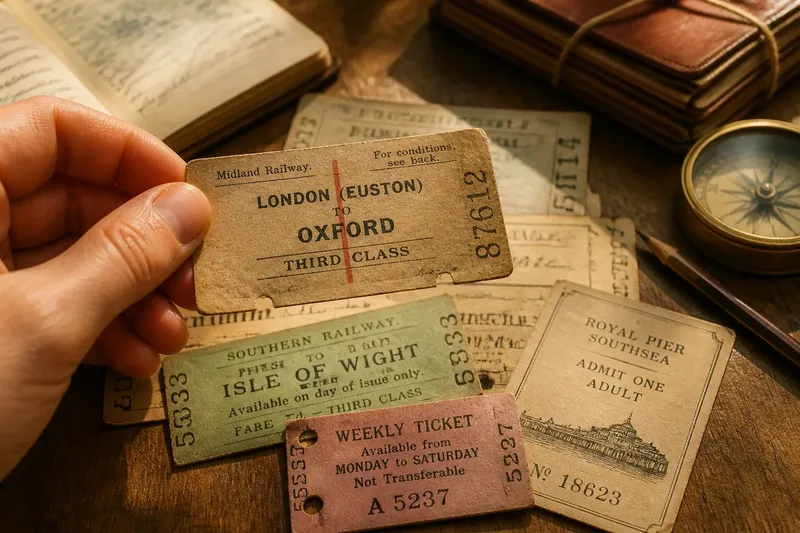
A sequence of places is easy to remember because it follows the route: train, hotel, museum, dinner. But a reader can follow that sequence and still have little sense of what the journey felt like to you.
Usually, the cause is treating completeness as the goal. Instead, look for a scene in which something changed, however slightly: you began to understand a place, revised an assumption, noticed another person’s kindness, or simply became aware of your own tiredness.
Write that scene first, before filling in any route details. A quick test is to ask what the reader should be able to picture after reading the account. If the answer is only a list of destinations, choose a moment with a person, object, sound or decision in it.
When the memorable moment feels too ordinary
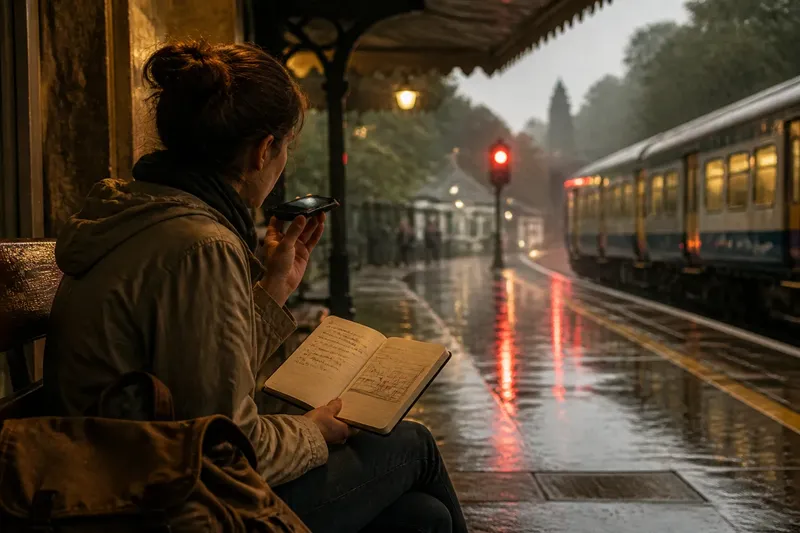
People often dismiss the moments that make the strongest anchors: waiting for a ferry, buying bread, sharing a bench, or struggling with a map. They seem too small beside a famous view or a major attraction.
That judgement confuses importance with scale. A scene earns its place when it reveals how you experienced the journey, not because it would impress someone looking at a map. A commonplace action can carry the contrast between what you expected and what actually happened.
Try asking what made you notice the moment. Was there a detail you can still see, a choice you had to make, or a feeling that did not fit your plan? If none comes to mind, the scene may be a useful detail but not the account’s anchor.
When the scene is vivid but hard to follow
A remembered scene may arrive as disconnected impressions: a clatter, a blue doorway, a sentence, then the taste of tea. Putting those details down in the order they surface can leave the reader unsure where they are or why the moment matters.
Give the scene a simple movement. Establish where you are and what you are doing, introduce the detail or interruption that draws attention, then show what you did or noticed next. This is not a demand for a dramatic twist; a small shift in attention can provide enough shape.
Imagine you are remembering a crowded bus ride in an unfamiliar town. You begin with the wet umbrella against your coat and the stop you are trying to recognise; when a passenger points out the street, you step off with a clearer sense of where you are. Those concrete actions give the reader a route through the scene and a change to follow, without requiring a report of every stop.
When the reader cannot tell why the moment belongs
A scene may be well observed yet feel detached from the journey around it. This often happens when the account omits the small amount of context that would make the moment legible, or leaves the reader to guess why it stayed with you.
Add context only where it helps the scene. A sentence can establish what you had expected, what you were trying to do or what had happened just before. Then let the scene carry the meaning; an explanation after every detail can close down the reader’s own response.
For instance, if a quiet conversation at a station mattered because you had been avoiding asking for help, say so briefly. You do not need to explain the whole day or assign the stranger a larger role than the memory supports. Keep the scene’s significance proportionate to what you actually recall.
When details are missing or uncertain
Memory often preserves the arrangement of a moment but not its exact wording, sequence or setting. Trying to repair those gaps by filling them with plausible detail can make a personal account sound certain where it is not.
Separate what you remember clearly from what you infer. Keep a sensory detail if it remains distinct in your mind; if the colour of a sign or the exact sentence has gone, leave it broad rather than inventing precision. You can also write from the limits of recall: you remember a question, but not the words used.
This restraint does not weaken the scene. It helps the reader understand that the account is a memory, not a transcript. If a detail is not essential to the moment’s shape, it can stay out.
When the scene takes over the whole account
Choosing one anchor does not mean every other part of a journey must disappear. The opposite problem is lingering so long over the central scene that its setting and consequences become difficult to see.
Use a brief opening to place the scene in the journey, then return to it after any necessary context. Once the scene has made its point, move on. A short closing detail can show what stayed with you later, but it should add something rather than repeat the meaning you have already explained.
Not every side street, meal or change of transport needs a cameo. It is not worth the effort to preserve a stop merely because it appears on the itinerary; keep it only if it clarifies the anchor or gives the reader useful contrast.
How can you choose and shape a travel memory scene?
How do I choose one scene from a long trip?
Look for a moment you can recall through a specific action or detail, rather than one you feel obliged to include. Ask which scene best shows what changed in your attention, expectation or understanding during the journey.
Does the scene have to be dramatic?
No. A small exchange, pause or practical decision can hold an account together if it reveals something about your experience. Scale is less useful than clarity: the reader should be able to see what happened and why it stayed with you.
How much background should I include?
Include only what helps a reader locate the moment and understand its pressure or significance. If a detail does not change the scene, clarify a choice or provide needed context, leave it for another account.
What if I cannot remember the details exactly?
Keep the parts you recall and avoid presenting guesses as facts. Broad but honest description is more convincing than invented precision, especially when exact dialogue or sequence is not necessary to the memory.
Keep the journey in view without recounting it all
A small-scene travel memory works best when it offers a doorway into the journey, not a claim to represent every part of it. You can nod to the wider route in a sentence, then let the chosen moment carry the account’s emotional and narrative weight.
Before sharing the piece, read it once for orientation: can someone tell where you are, what is happening and what changed? Then remove any detail that answers none of those questions. The journey may have been large; the scene that lets another person enter it can remain small.