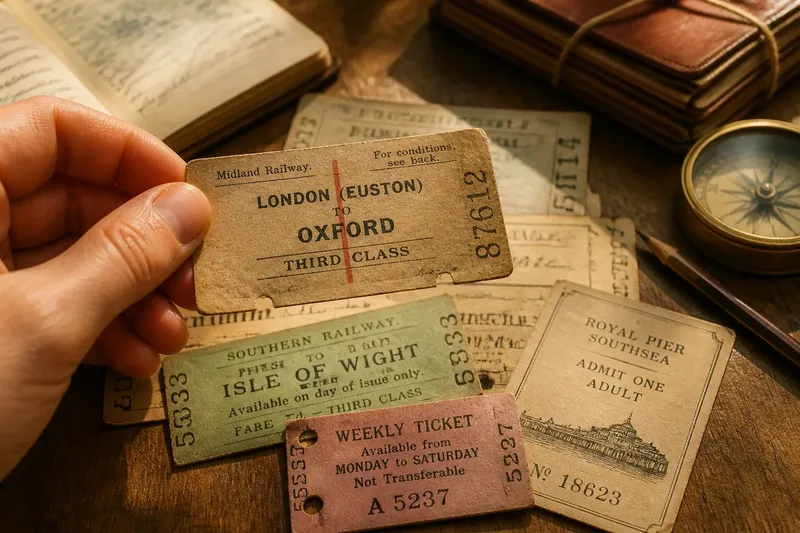
The Souvenir That Tries to Tell the Whole Trip
A souvenir cannot sum up a whole journey. Choose one that earns its place through a real association, and decide how to keep or use it at home.
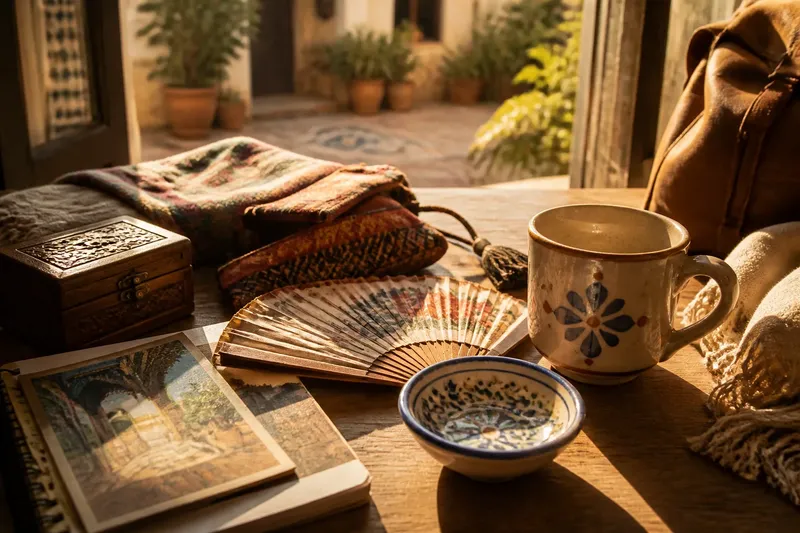
The common mistake with a souvenir is expecting it to represent an entire journey. That can leave you with a familiar landmark or decorative object that says little about what you actually enjoyed. A better souvenir has a clear job: it brings one particular moment to mind, or earns a place in your home through regular use.
Use the object itself to carry the memory, rather than relying on a separate written account. Its colour, shape, material or function can become the cue: a folded paper fan may recall a performance, while a small bowl might take you back to a meal shared at a crowded table. Choose something whose own features connect to the moment, not merely to the destination.
Choose a souvenir that points to a particular moment
Before buying or keeping an object, name the scene it brings to mind. Look at its material, design or purpose and ask which part of the experience those features recall. If the answer is only the place name, you may be choosing a generic memento rather than an object with a personal connection.
For example, imagine you are choosing between a standard skyline magnet and a hand-painted tile that resembles the pattern on the courtyard floor where you stopped to rest. The magnet may identify the destination, while the tile has a direct visual link to a moment you remember. If neither appeals beyond its location, leave both behind.
A good personal souvenir need not be rare or elaborate. A printed programme, a locally made utensil or a small piece of textile can serve if its form is tied to something you did or noticed. Avoid buying an item simply to meet an imagined expectation that every trip needs a souvenir.
Compare one keepsake, a small group and a useful object
One object is easiest to display and care for, but it can only suggest a narrow part of the trip. A small group can represent contrasting moments, though it takes more space and may encourage collecting for its own sake. A useful household object can bring a memory into a daily routine, but ordinary wear may eventually change its appearance.
Use these checks to decide what fits your home and habits:
- One keepsake: Check whether one object connects clearly to a scene; if it does, keep that piece, and if it does not, choose no object rather than a generic substitute.
- A small group: Check whether each piece recalls a different moment; if the objects repeat the same association, keep the strongest one, and if they each add something distinct, store or display them together.
- A useful object: Check whether you would use it without its travel connection; if yes, choose a care routine that suits its material, and if no, treat it honestly as a display keepsake or leave it behind.
- A delicate object: Check whether you have a stable, protected place for it; if you do, bring it home with suitable packing, and if you do not, choose a sturdier alternative.
- A bulky object: Check whether it can travel home safely and fit the space you have; if both are true, keep it, and if either is false, select a smaller item or no souvenir.
- An item made from natural material: Check the seller’s information and applicable local rules; if its origin and transport are clear, proceed as permitted, and if they are uncertain, do not buy or carry it.
Not every trip needs a collected object. Taking time to find a symbolic item at every stop is not worth the effort if shopping interrupts the experience or leaves you with things you do not want at home.
Give a souvenir a place in your home
Decide where an object will live before you bring it home. A small keepsake might belong on a shelf with other personal items; a useful object might go where you will actually reach for it. This simple choice can reveal whether the piece suits your space or is likely to become clutter.
Imagine you have chosen a handmade ceramic cup from a trip and know your kitchen has room for one more. You check that the cup is suitable for your intended use, wrap it securely for the journey, then place it beside the mugs you already use. If its shape makes it awkward to handle, you can keep it as a display piece instead; if you have no suitable place for either use, it is better to leave it behind.
For objects that need particular care, follow the maker’s instructions and use materials appropriate to the item. Do not assume that a sentimental connection makes an unsuitable storage spot safe; choose a location that protects the object while still allowing you to enjoy it.
What should you consider before bringing a souvenir home?
How do you choose a souvenir with personal meaning?
Look for a direct connection between the object’s appearance or use and a moment you remember. If you cannot name that connection, choose something you genuinely like for its own sake or leave it behind.
Should you buy one souvenir or several?
Choose one if a single object recalls the moment that matters most. Choose a small group only when each piece adds a distinct association and you have room to keep them together.
What if you do not want a display piece?
Choose a practical object you would use at home, such as a utensil or fabric pouch, if it suits your habits and care needs. If you would not use it and do not want to display it, you do not need to buy a souvenir.
Can a souvenir be unsuitable to bring home?
Yes. Local rules, transport restrictions, fragile materials or uncertain origins can make an item a poor choice. Check relevant guidance and the seller’s information; if anything remains unclear, leave the object where it is.
Let the object keep its own scale
A souvenir can matter without standing for every person, place or event on a trip. Let it recall one scene, texture or useful habit, and resist asking it to carry more than that. The most satisfying keepsake is one you can enjoy at home without needing to explain the whole journey whenever you see it.
For a souvenir that tries to tell the whole trip, the practical test is simple: can you name its place in your home and the moment or use that makes it yours? If you can, keep it. If not, leave room for a more fitting object—or for no object at all.